
Sudden death in cattle close to water and urea lick
Unusual presentation:
Four of a mob of 200 cattle were found dead within 50 metres of the water and lick trough. The others in the paddock appeared healthy.
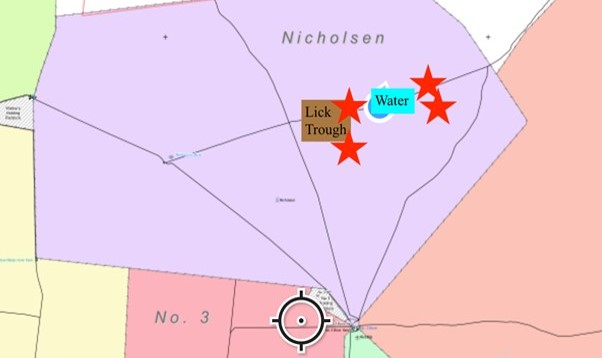
Above: Location of dead cattle in relation to water source and lick trough nearby
Time and location: September 2025 on a cattle property in western Queensland.
Case definition: Four 18-month-old composite Bos indicus cattle (2 heifers and 2 steers) died close to water and urea lick trough. The carcases were decomposing when examined but some observations could be made:
- All cattle were bang tailed (indicating they had been vaccinated for botulism)
- There was no sign of struggle
- The two heifers were not pregnant and dry
- The rumen contents of the two heifers contained large amounts of lick
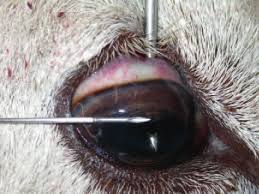
- Ocular fluids were sampled on the two heifer carcases (where eyes were still present) and very high ammonia levels supported (but did not confirm) a diagnosis of urea poisoning
Disease mapping: All carcases were found close to the water source in the paddock, where the urea lick had also been located.
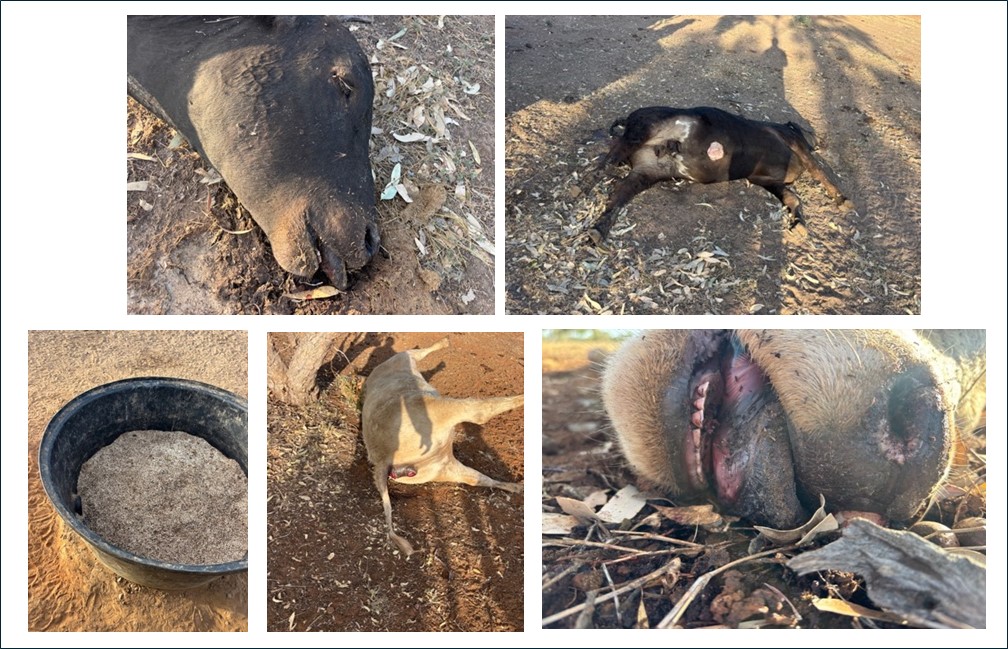
Above: Carcases and lick
Field differential diagnoses:
- Urea/ammonia toxicity (most probable)
- Botulism
- Clostridial diseases.
Animal / management / environment risk factors: A combination of unrestricted access to urea and availability of water near the lick trough led to acute ammonia toxicity (urea poisoning).
Urea is converted by rumen microbes to ammonia and if ammonia is not sufficiently digested by microbes or removed by the liver, increased blood concentrations can cause sudden death, which is suspected in this case. Water can increase the absorption of the rumen and can also increase the consumption of urea as it improves the palatability. When the urea lick becomes wet it can dissolve and recrystallise causing ‘hot spots’ – which may have occurred in this case because there had been a small amount of rain over the previous 3 days, and examination of the area showed a leak from the tank providing water to the trough.
Recommendations:
Immediately
- Move the lick trough further away
- Check the rest of the cattle every second day (there were no more deaths)
Ongoing
- Introduce urea gradually.
- Provide adequate roughage.
- Keep lick troughs at least 500m from water.
- Protect lick troughs from rain and moisture.
- Ensure urea lick levels are maintained to avoid gorging when refilled.