
Chickens paralysed and dying from botulism
Unusual presentation:
Acute onset weakness and paralysis in backyard chickens. Chickens found with heads hanging and unable to rise after being healthy 12 hours previously.
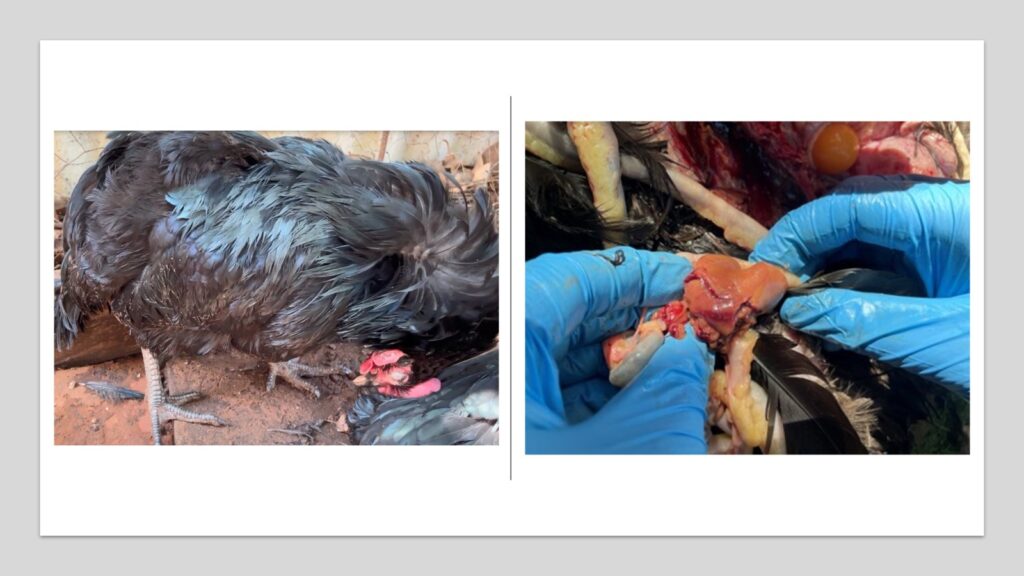
Left: Hen with head hanging Right: Fatty liver on PM
Time and location: September 2024, peri-urban, northern Western Australia
Case definition: 5 of 11 hens (8 months old) in a backyard laying flock had paralysis that progressed to inability to move, difficulty breathing and death (or euthanasia).
Disease mapping: All the chickens were kept in a laying pen in the house yard, had intermittent access to the garden and were fed maize and pellets in the pen. A possum or rat carcass that was mostly eaten, rotten and degraded was observed in the pen.
The five diseased chickens died or were euthanised. The remaining 6 chickens were unaffected.
Gross findings:
Fatty liver. BCS 2/5, internal fat still visible but lacking around keel.
Mild clear mucoid discharge in the upper respiratory tract
Moderate worm burden.
Field differential diagnoses: Botulism, Marek’s disease, ionophore toxicity, avian influenza, avian infectious laryngotracheitis, avian infectious bronchitis.
Laboratory findings:
- Negative PCR results for avian influenza, avian infectious laryngotracheitis, avian infectious bronchitis, Newcastle disease.
- Bacterial culture did not isolate significant organisms.
- No parasites found on faecal floatation and those seen on PM are likely incidental.
- Botulinum C toxin gene qPCR revealed a positive result in the intestine of the euthanised chicken.
Animal / management / environment risk factors: Botulinum toxin can be ingested from an affected carcass when chickens peck at it or eat the maggots from it.
Recommendations:
- Ensure there are no dead animal carcasses in the pen with the chickens – walk through the cage at the time of feeding and remove any dead
- Consider control for rodent infestations.
- Provide clean water and feed chickens from a feeder rather than off the ground.
- Worm chickens every 6-8 months